


DIAGNOSTICS
Is cholesterol really the enemy? A closer look
Few medical terms are as feared and as widely misunderstood as cholesterol. But labelling cholesterol as simply 'bad' does not do justice to this complex substance, and it says little about actual cardiovascular health.
Cholesterol is a vital fat-like substance. "It's an essential component of our cell membranes and cell walls; as such, it is partly responsible for ensuring the structural integrity of all cells in the body," says Peter Gartner, Head Physician at Park Igls Medical Spa Resort. This may come as a surprise – and the story doesn't end here. "Cholesterol is also essential for the production of hormones and vitamin D; it's vital for bone density, and it allows our immune system and brain to function properly. Furthermore, it's important for the production of bile acids, which are indispensable for digesting fats." In short: cholesterol is actually great. And because it is so fundamental to the body, it's not primarily obtained from food; our liver produces 80 to 90 per cent of the body's required cholesterol. So why have we started scapegoating this elixir of life?
"Cholesterol is essential. A severe cholesterol deficiency would make us susceptible to infection and could cause infertility and, in the worst case, dementia."
Understanding cholesterol levels
In the 1950s, medical research discovered that the dreaded vascular deposits known as plaques largely consist of cholesterol, directly affecting cardiovascular health. They represent a significant risk factor for atherosclerosis, which can lead to heart attacks and strokes. From then on, the medical profession made a strict distinction between 'bad' LDL cholesterol, which transports fat to the periphery, and 'good' HDL cholesterol, which carries it away. The almost inevitable consequence was that LDL thresholds were progressively lowered, and high cholesterol — or even a slightly elevated cholesterol level — was increasingly treated as a cause for alarm, often without considering the bigger picture of cardiovascular health. Yet despite the widespread use of cholesterol-lowering drugs, problems persisted; many patients suffered heart attacks or required bypass surgery despite having low LDL levels. Conversely, there were people with incredibly high cholesterol levels whose blood vessels were completely elastic and clear. The development of vascular disease is therefore significantly more complex. Medical research has now discovered the missing piece of the puzzle, which goes by the somewhat unwieldy name of trimethylamine N-oxide, or TMAO for short.
TMAO explained
TMAO is a naturally occurring messenger substance in the body that acts like a biological superglue: it literally glues the cholesterol circulating in the blood to the inner walls of the blood vessels. When TMAO levels are high, cholesterol is rapidly incorporated into the plaques, regardless of whether there is a high or low overall level of cholesterol in the blood. Now that this is known, we can begin to rewrite the story of cholesterol, as continuing to drive cholesterol levels even further down will not do the job.
"Imagine that, during the summer months, more and more children start to drown in swimming pools, and the proposed solution is simply to lower the water level next year. It won't be nice for swimming, and children will still drown. Then they propose lowering the water level even further. But it's not the water that's harmful; it's the children's inability to swim," explains Peter Gartner quite graphically.
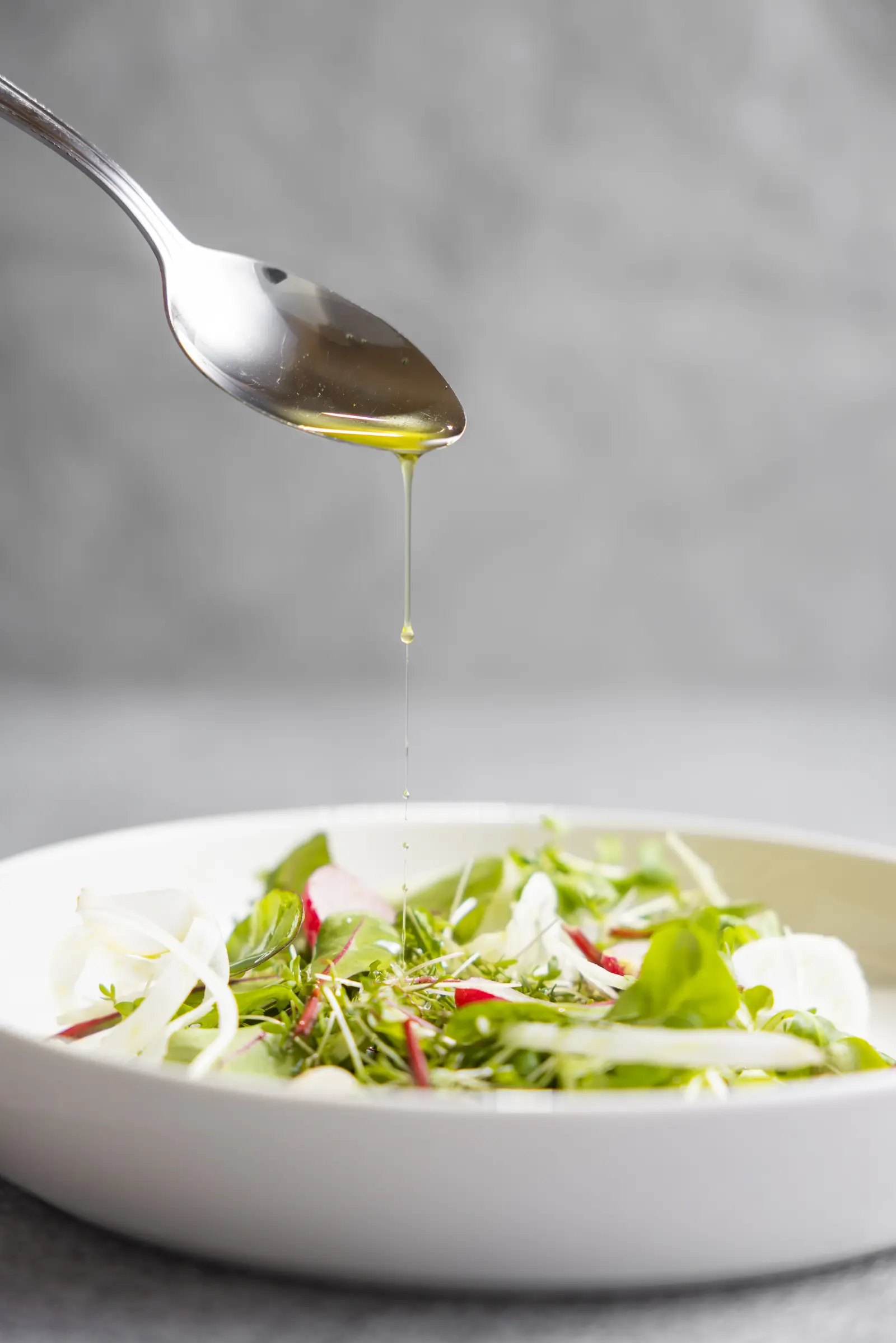
To get a grip on TMAO, we need to look at how it is formed. TMAO is produced in the liver when certain gut bacteria are fed excessive amounts of choline, L-carnitine or lecithin. These substances are primarily found in foods such as red meat, eggs or dairy products. The good news is that this process is reversible, and nature has provided us with some clever countermeasures. Dimethyl-butanol (DMB) is one such example, found in abundance in Mediterranean cuisine: in extra virgin olive oil, for example, high-quality balsamic vinegar or green vegetables. The Mediterranean diet has long been associated with a lower risk of cardiovascular disease, and we now have a scientific explanation for this.
The Mediterranean diet for cardiovascular health
As an F.X. Mayr practitioner, Peter Gartner really appreciates this insight: "At last, we know why the much-lauded Mediterranean diet is so effective against atherosclerosis and, consequently, against heart attacks and strokes. And I'd like to think that even Franz Xaver Mayr wouldn't have turned down a nice salad with fine balsamic vinegar, fresh vegetables, golden olive oil and perhaps a glass of red wine to go with it."
How does Gartner apply his knowledge about TMAO in his practice? "If the blood vessels are completely clear and free of significant deposits, I can avoid prescribing cholesterol-lowering medication and instead offer advice on dietary measures." Physical activity supports cardiovascular health, too.
Health can rarely be reduced to a single number from a lab test, and cholesterol results — even signs of high cholesterol — are no exception. Cholesterol remains an important part of risk assessment but is rarely the only culprit. So, the really important question is not how high our cholesterol level is, but what the body does with it — and what that means for long-term cardiovascular health.